










Sticker or digital: how vignettes actually work across Europe
Some countries still use a physical sticker, others don't — and none of them recognize each other's.
There's no single vignette system across Europe — each country runs its own, and they don't talk to each other. Austria and Switzerland still use the older model: a physical sticker bought at a kiosk or online and placed on the windscreen, checked visually by roadside enforcement. Hungary, Slovakia, Slovenia, and Bulgaria have moved to fully electronic systems, where the vignette is tied to your plate and checked automatically by cameras — nothing to display, nothing to peel off later. Romania sits slightly outside this pattern altogether, running its own separate rovinieta scheme rather than a vignette in the strict sense.
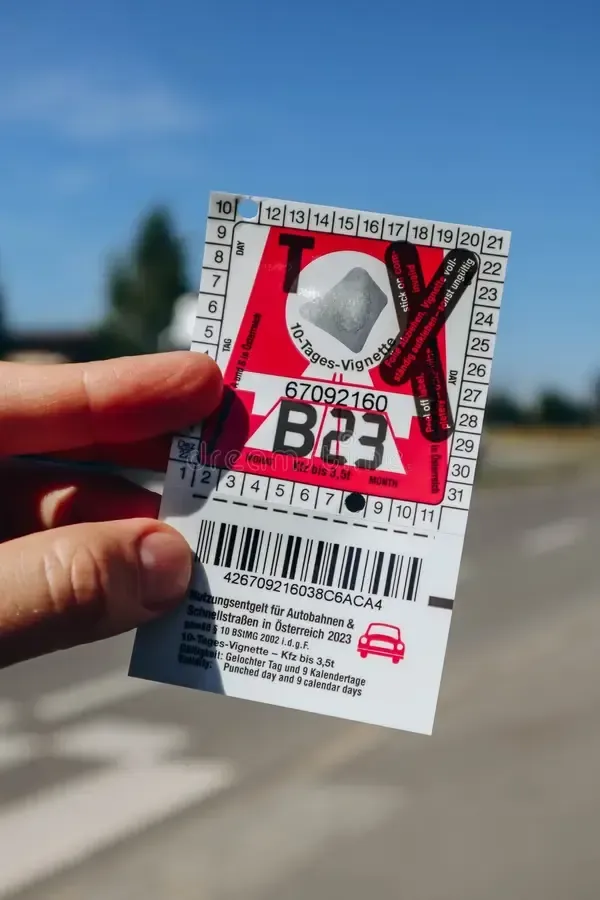
The one rule that holds across all of them: none of these countries recognize another's pass. Crossing from Slovenia into Austria, or Hungary into Romania, means buying a fresh one for wherever you're heading next, regardless of what you already have for the country you're leaving. On a trip that crosses several borders, that adds up to several separate purchases, not one that covers the whole route.
Knowing which system a country uses mostly changes how far in advance you need to plan. A sticker can sometimes be bought right at the border. An electronic vignette generally needs to be active before you're on the tolled road, so leaving it until the last minute is riskier.